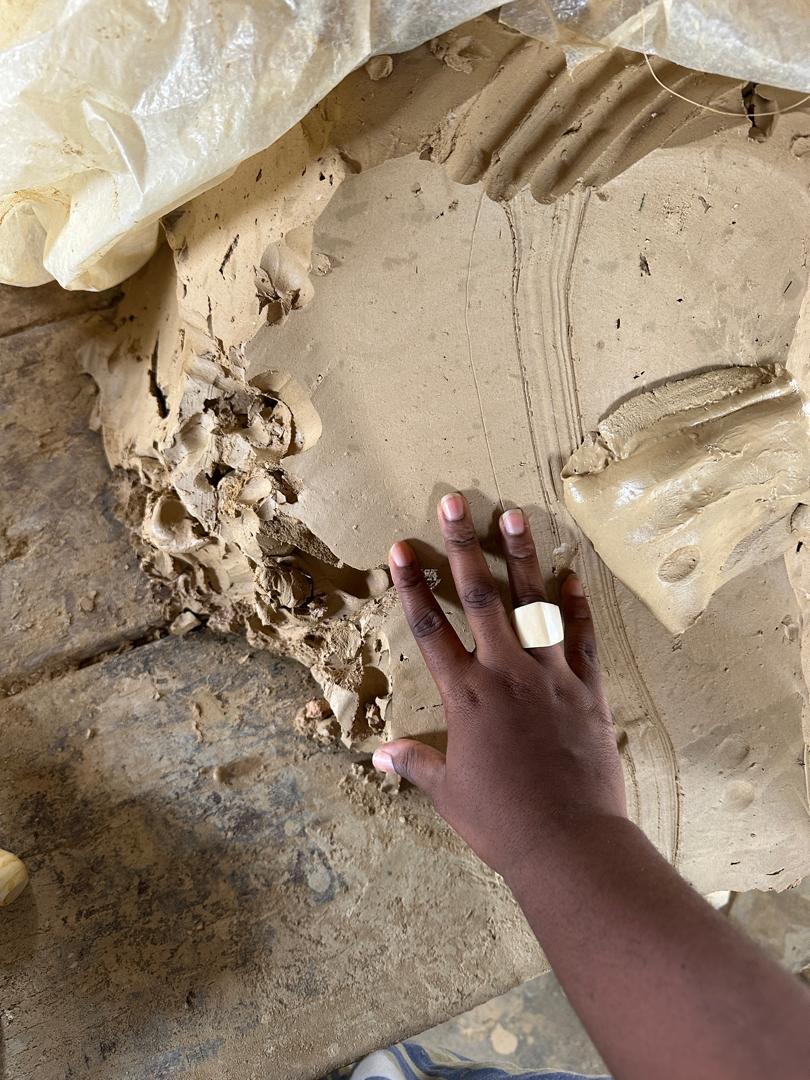

In the last fourteen months, I’ve made a lot of assumptions. Many of them I made based on my learnings from the previous five years of making things with people in this country (I’ve been making things by myself for much longer). Most of these assumptions have proven untrue. I didn’t think people would find much value in wayfinding that helped them escape my particular situation until my dear friend, Rose, pointed out that it was important to learn what was not possible very quickly.
Over the last fifteen months, I have attempted to make a few clay objects for sale. The first attempt was a board game for my design and research studio. My first assumption was correct: the potters would struggle if I didn’t work out precise measurements. The piece did not have much room for error. I purchased 10 kilograms of clay from Clay Therapy. I fancied that I could make more samples or even continue to work with clay as a medium. A few YouTube tutorials and two long afternoons later, I had two samples. They dried in a few days, and Daniel from Clay Therapy facilitated a first firing at Clay Industry, Oregun. After the pieces were fired, my amateurish attempt became apparent to me. Crooked lines and a slight crack all revealed themselves. I knew these were not my final samples.
At the same time, I had begun the hunt for pure white glaze I desired to achieve my vision. It took about six weeks from research to receipt from Kwara State. The next question was, who could glaze and fire the pieces? They were all unsuitable. Paint and Bake, a ceramic painting service, didn’t fire pieces outside those made in their space, and Ilorin was too far to send the pieces; the cost per piece would significantly increase, and there was the fear of breakage. Someone turned up, but he was unavailable, but I was assured he could do the job; I just had to wait. And I waited.
While waiting, research also brought me a bright piece of information- kaolin, the same mineral responsible for white china pottery, was available in Nigeria. I thought I had found a way to avoid what had become the obvious problem of glazing. I contacted a potter in Ibadan, whom I found on YouTube working with kaolin to create the exact piece, assuming I would receive a professional finish, seeing as he had much experience. I paid for a sample that was promised to take two weeks. I was quickly disabused of the notion that I could have my piece white. Kaolin was too weak to withstand the impact that functional objects receive; it would be mixed with clay and would still need glaze. It took well over three months after many calls, pleadings, and threats. I had to correct many obvious mistakes, as the potter did not, in fact, have the capacity to glaze the piece. I acquiesced to having it painted whit, and I paid to have another made in plaster of Paris.
The samples arrived, and they were absolutely horrid.. My first attempt was leaps ahead of these pieces. They could not even sit flat and wobbled terribly. The measurements were off in both pieces, from a tolerable ten percent to the egregious forty percent. There were large holes and chips broken off. My fury was met with the belligerence, and then l, after a plea to try again, as he explained that the poor results were, in fact, that way because it was a first sample.
I had to return to plan A; find someone to glaze my piece. By this time, seven months had passed since I picked up a wad of clay. The potter that was promised never came, and so I turned my eyes to a pottery in Lekki-Pottery by Ablesworth. They had come recommended, and I was willing to pay higher costs for a seamless service, hoping to have them eventually produce the pieces as well. I instructed one piece to be glazed with the glaze I purchased and the other with the brilliant white glaze the pottery had in stock. The glaze was store-bought, and the potter seemed to have more confidence in it, as the seller from Ilorin could not provide specific mixing ratios and firing temperatures necessary for achieving consistent results with glazes. The glaze I purchased came out as a pale yellow. The one glazed with pottery’s glaze came out grey, splotchy with large craters that revealed the terracotta beneath. I was told the process had failed as a result of the lack of a pyrometer and fuel finishing before the process was complete. The process took 25 days instead of the 10 days I was promised.
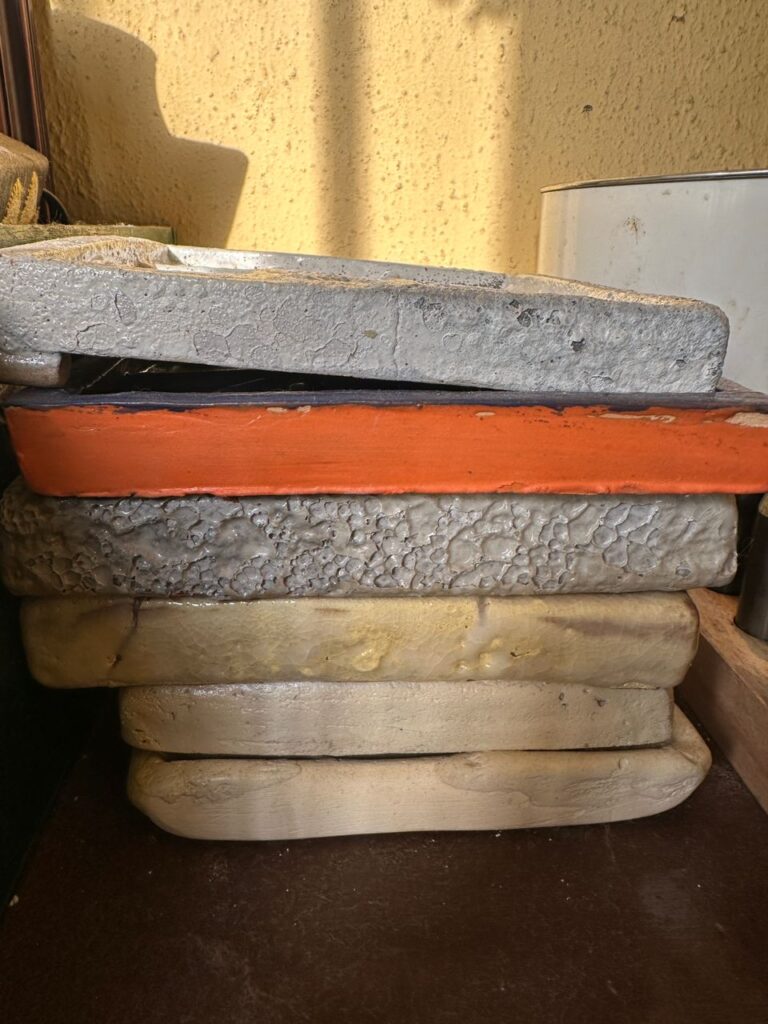
The yellow one looked fine, so I assumed this was a fluke and the replacement I was promised would look better. And it did look better. It took about a week, but my piece was glazed blue- a member of staff had made a mistake. I rebuffed an attempt to convince me to paint it and insisted it be remade. The last attempt took a month, after which I received a piece that was half grey and white because water had gone into the kiln. It was at this point that I realised I had to give up. Perhaps not forever, but I had exhausted all the options I had. The six incorrect samples were shelved as proof of an unsuccessful experiment.
I was not done. I designed a few new pieces, about ten of them. Half for my jewellery brand-RENIKEJI and the other half for Studio GB. Abuja had this illustrious past as a pottery centre in the 60s, which was long before it was carved out to be Nigeria’s capital. It was here that the renowned Ladi Kwali worked and trained people in the art of pottery. Her pieces were glazed, and so were the pieces I had come across from the Bwari Pottery Village. I assumed that must have been the place she lived and worked. I was wrong. The Abuja Pottery Center had languished for many years; it was recently renovated, however, the pieces were painted, not glazed like the pottery that had once been sculpted there.
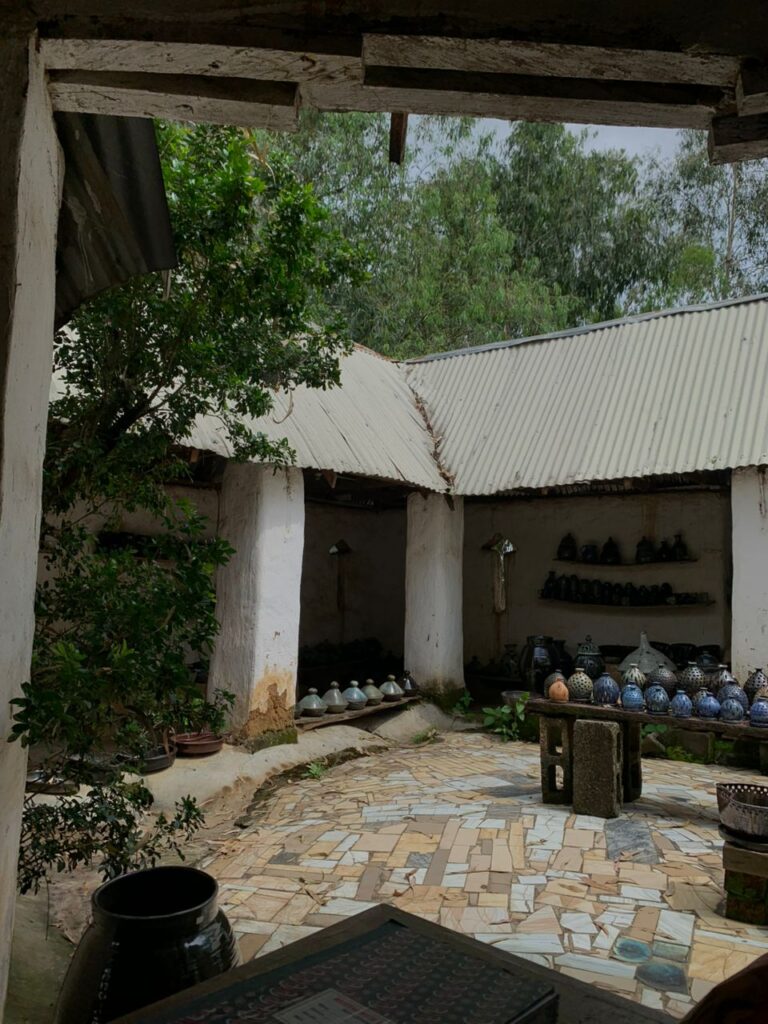
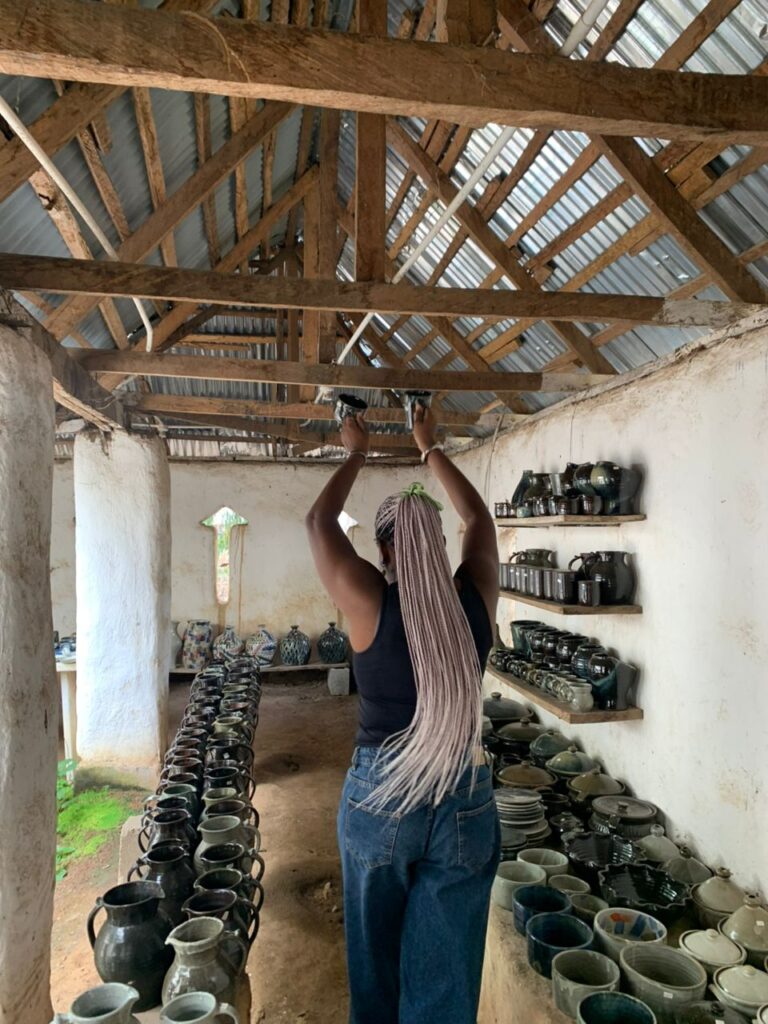
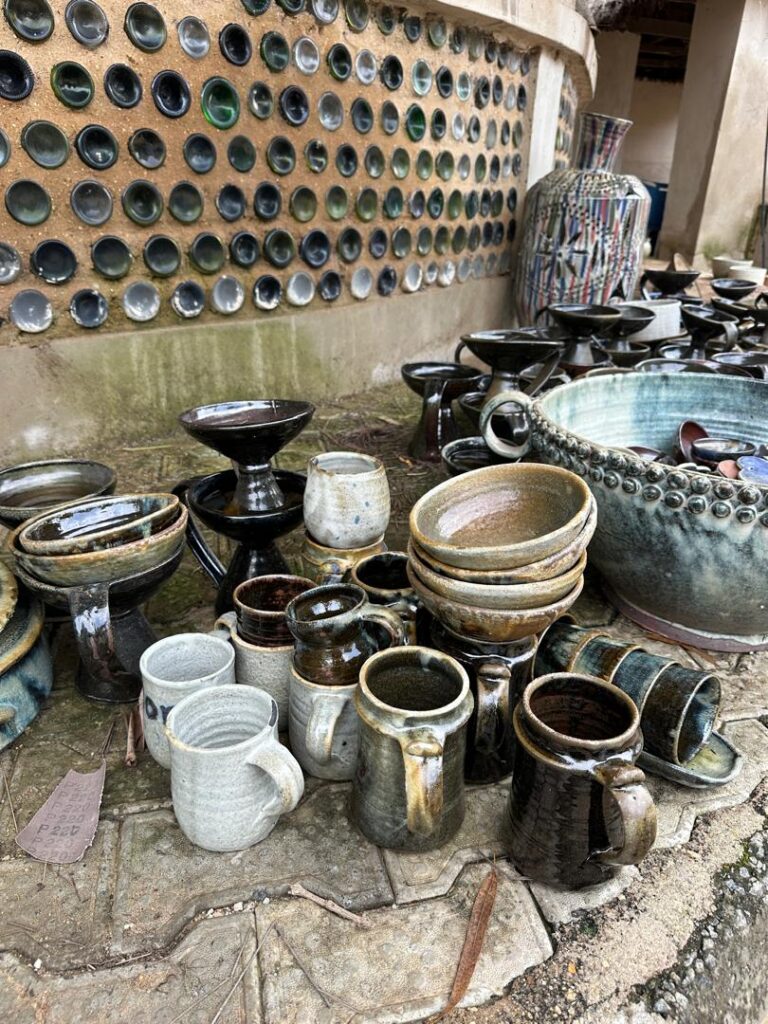
Bwari was a dream. Their pieces were glazed with blues, blacks, and whitessomehow also came in differing shades of green, brown, and red. The pottery was i this idyllic compound with small buildings for various activities they carried out. The operation ran quite efficiently as they churned out tableware and decorative objects in large numbers. I assumed that my pieces would be achievable. This was not true. Half of the designs could not be produced, and another quarter had to be redesigned to very simple forms that could be thrown on a wheel. Slab building was not their forte, and it was clear that they considered an attempt wasteful of their time and effortespecially because the wood kiln was erratic, often causing large pieces or pieces with hollows or delicate corners to warp. The disappointment was very heavy, but I was grateful for it. I had clarity, and I did not have to waste resources on a process they could not commit to. I’m currently manufacturing a few pieces with Bwari Pottery Village. I have come across more than a few brands that manufacture their pieces there, so I’m hopeful for the outcome.
This journey has filled me with a kind of lingering gloom. I’m no stranger to how arduous journey of making anything here, even very simple things. A few years ago, I even argued that it was a kind of collaboration with context that produced our specific output. These days, I’m reconsidering that proposition. How much of a vision can you change an idea before it becomes a betrayal of your own vision? This is a metaphysical question I ask very bitterly. The board game sits on the heap of abandoned dreams, the pieces that are making their way out are so changed I can hardly recognise them. The only solution is the costly self-sufficiency every Nigerian practices – I had to become a potter and fork out a few thousand dollars to make things possible. Both options are unavailable to me. I thought I had made peace with the lack here, but to lose practices we had a few decades ago is something so devastating, I had to weep. In some way, this is part journal entry, part guide. I hope it helps someone. It has helped me.

No Comments